
 Portugal
 Antigua & Barbuda
 St Lucia
 Grenada
 St Kitts
 Dominica
 Hungary
 Malta
Malta Greece
 Italy
Italy Latvia
 Turkey
 Vanuatu
 Canada
 USA
USA Nauru
Nauru New Zealand
 Panama
 Cyprus
 Sao Tome
 UAE
UAE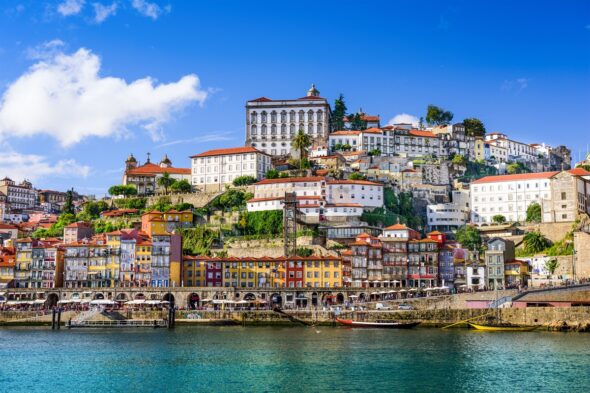
Portugal
From €500,000 + costs
Private Equity Investment
European Residency
EU Schengen Zone Travel
Apply Citizenship 7-10 years

How elite athletes use citizenship and residency by investment to clear visa barriers
29 September 2026
Around 16.5% of players at the last men’s World Cup in Qatar were born in a country other than the one they represented, up from roughly 5% at the first tournament in 1930.
Cross-border careers are now standard across professional sport. The English Premier League is around 63% foreign-born, Spain’s La Liga around 38%, and Major League Baseball around 28%. Formula One runs across five continents in a season. Tennis professionals compete in as many as 30 countries a year. Every one of those movements depends on a document, and the document is the part of the career an athlete usually has the least control over.
La Vida has handled a steady flow of enquiries from this group: footballers whose right to remain in a country expires with their contract, Olympians from lower-ranked passport countries who miss qualifying events, and individual-sport competitors whose season is a rolling series of consulate appointments.
Sport treats nationality as a technical qualification rather than a background detail. The Olympic Charter requires an athlete to hold the nationality of the country they represent. FIFA requires permanent nationality independent of residence, and changes of association are tracked on a central digital platform. FIBA permits one naturalised player per national team in an official game.
Domestic leagues apply a second layer. Spain’s La Liga generally caps first-team squads at three non-EU players. Italy’s Serie A restricts the number of new non-EU registrations a club can make in a window depending on squad composition. A player who holds EU, EEA or Swiss nationality falls outside those caps. A player who does not competes for a limited number of slots against everyone else who does not.
The commercial effect is direct. Two players of equal ability are not equally signable if one occupies a quota place and the other does not.
Ranking does not exempt an athlete from border rules. In April 2025 the two-time Olympic and six-time world freestyle wrestling champion Abdulrashid Sadulaev was refused a Schengen visa for the European Championships in Bratislava, and later missed the World Championships in Croatia for the same reason.
Short-notice travel makes the exposure worse. Schengen sports visas require an invitation from the relevant national federation or organising body, proof of accommodation and return travel, and compliant insurance, and processing runs from a week to several weeks depending on the consulate.
Cumulative training camps count towards the 90-days-in-180 limit, and overstaying triggers multi-year bans. A qualifying event, a trial, a late replacement call-up or a rescheduled fixture rarely fits that timetable.
The fix is structural rather than administrative. An athlete holding a second passport with Schengen access, or a residence permit issued by a Schengen state, removes the application from the process entirely.
Three developments this year are relevant to athletes planning a European base or a second citizenship.
Portugal’s Golden Visa remains open and is one of the most popular residency programs in Europe. A Portuguese residence permit gives visa-free travel across the Schengen Area from the first grant, and the average stay requirement of seven days a year fits comfortably around a competition calendar.
Permanent residence is still available after five years. Under Lei Orgânica 1/2026, in force from 19 May 2026, it is possible to apply for citizenship after 10 years of legal residence, or seven years for EU and CPLP nationals.
Malta’s Citizenship by Merit route recognises individuals who have rendered exceptional services to Malta or to humanity, and sport is one of the fields the framework names. The route sits under Article 10(9) of the Maltese Citizenship Act and is granted entirely at the government’s discretion. It isn’t an investment route. Each case is assessed individually on the applicant’s achievements, a genuine link with Malta built through residence, and strict due diligence.
For an athlete with a sustained international record, it offers a path to EU citizenship based on achievement rather than capital, and Malta’s Permanent Residence Program provides a Schengen base from which that link can be built.
Greece’s Golden Visa continues to attract strong demand, and it carries no minimum stay requirement, which suits athletes who spend most of the year travelling. The real estate route starts at €250,000 for qualifying commercial-to-residential conversions and restoration projects, rises to €400,000 in most regions and €800,000 in Athens, Thessaloniki and the larger islands. The Greek government has announced plans to raise the property transfer tax for non-EU buyers from 3% to 15% from 1 July 2027. Investors who complete a purchase before then secure the current rate, which makes the coming months the time to act.
The program already counts elite sport among its investors, with 24-time Grand Slam champion Novak Djokovic securing a Greek Golden Visa in 2025 after buying a residence in the coastal Athens suburb of Glyfada for more than €800,000.
Citizenship by investment grants full citizenship and a passport in return for a qualifying contribution, with no requirement to live in the country. Processing typically runs from three to nine months. For an athlete, that timeline is the point, because it can be completed inside a single off-season.
A regional minimum of US$200,000 has applied across the Eastern Caribbean since July 2024, with individual programs pricing at or above it.
Caribbean Citizenship by Investment
A regional minimum of US$200,000 has applied across the Eastern Caribbean since July 2024.
| Program | From | Why Athletes Choose It |
|---|---|---|
 St Kitts and Nevis St Kitts and Nevis | US$250,000Sustainable Island State Contribution | The strongest passport in the region for visa-free access. |
 Grenada Grenada | US$235,000National Transformation Fund | US E-2 Access The only Caribbean program with a US E-2 treaty, after three years of domicile. |
 Antigua and Barbuda Antigua and Barbuda | US$230,000National Development Fund | Five days in the country across the first five years. |
 St Lucia St Lucia | US$240,000National Economic Fund | No residence requirement at any stage. |
 Dominica Dominica | US$200,000Economic Diversification Fund | Running since 1993, one of the oldest programs in the world. |
All five give visa-free access to the Schengen Area. UK access differs by program. None confers EU nationality. Figures correct as at August 2026.
All five give visa-free access to the Schengen Area. UK access differs by program and should be confirmed at the point of application. None of the five confers EU nationality, so a Caribbean passport does not move a player out of a La Liga or Serie A non-EU quota.
Residency by investment gives legal residence, family rights, healthcare and schooling access, and a settled base that does not expire with a playing contract. Minimum stay requirements are the deciding factor for this client group.
European Residency by Investment
Minimum stay is the deciding factor for an athlete on a full competition calendar.
| Program | From | Time in Country |
|---|---|---|
 Portugal Portugal | €500,000Qualifying investment funds | 7 Days a Year Permanent residence possible at five years, citizenship application at ten. |
 Greece Greece | €250,000Conversions and restorations. €400,000 most regions, €800,000 Athens, Thessaloniki and larger islands | No Minimum Stay Three tiers, so the entry point follows the location. |
 Hungary Hungary | €250,000Qualifying real estate fund | No Minimum Stay A ten-year permit and one of the fastest timelines in the EU. |
 Malta Malta | Property plus contributionQualifying lease or purchase | Permanent From Day One No renewal cycle to work around the season. |
A European residence permit removes the Schengen visa application for the holder and their family. It does not create EU nationality or change quota status in a domestic league. Figures correct as at August 2026.
The UAE Golden Visa provides ten-year renewable residence, with qualifying routes including AED 2 million in property and a nomination category for outstanding talent that has been used by athletes through the Emirates’ sports councils. Dubai and Abu Dhabi function as year-round training bases with direct connections to Europe, Asia and Africa, which is why the UAE appears most often in enquiries from athletes managing a global fixture list rather than a single-country contract.
Second citizenship and residency solve mobility, family security and post-career access. They do not solve eligibility.
An investment-based passport does not shorten the IOC’s three-year waiting period for a change of national representation, though the IOC Executive Board can reduce or waive it with the agreement of both national committees and the relevant federation. It does not satisfy FIFA’s heritage or residence criteria for a change of association. It does not remove FIBA’s one-naturalised-player limit. A Caribbean or UAE document does not make a non-EU footballer an EU-quota player.
Where an athlete’s objective is a domestic league quota inside the EU, the realistic routes are ancestral citizenship through Austria, Germany, Ireland, Italy, Poland, Portugal, Romania, Spain or the UK, or naturalisation after a qualifying period of legal residence.
La Vida’s 2025 investor surveys show what drives applications more broadly. Among US investors, 76.4% named a Plan B back-up option as a main goal and 52% cited relocation, with political concerns cited by 85.1%. Among UK investors, political concerns were cited by 72.8% and crime and security by 59.3%.
Athlete enquiries follow the same pattern with a shorter clock attached. A work permit ends when the contract does. An injury, a transfer that collapses, a lockout or retirement can leave an athlete and their family with no right to remain in a country they have lived in for years. During the 2022 Major League Baseball lockout, dozens of Latin American players lost visa status alongside their contracts and were unable to access training facilities in the United States.
Residence and citizenship acquired through investment belong to the athlete and their family, and they’re held independently of any club, federation or sponsor. They don’t lapse when a contract ends, a transfer collapses or a career winds down. For many of our clients, that independence is the reason they start the conversation. The right to live, train, educate children and plan a life after sport stays in place whatever the next season brings, bringing longer-term value and stability.
Playing careers are short and border rules are not. An athlete who waits until a refusal, a transfer window or a contract expiry to start the process is working to a timeline that investment migration cannot match. Started in an off-season, a Caribbean citizenship can be completed in months, and a European residence permit can begin a naturalisation clock that runs quietly in the background for the rest of a career.
La Vida’s advisers work with internationally mobile clients across every major citizenship and residency program, including Grenada, St Kitts and Nevis, Antigua and Barbuda, St Lucia, Dominica, Portugal, Greece, Hungary, Malta, Turkey and the UAE. Get in touch for a confidential assessment matched to your competition calendar, your family’s base and your position after the playing career ends.
Discover more golden visa programs. Visit the pages below for further options.
Portugal
From €500,000 + costs
Private Equity Investment
European Residency
EU Schengen Zone Travel
Apply Citizenship 7-10 years

St Kitts
Minimum $250,000 Donation
Real Estate Option
Citizenship & Passport
Long Established Program
Grenada
Minimum $235,000 Donation
Real Estate Option
Citizenship & Passport
E2 USA Visa Potential

Argentina Citizenship by Investment: Costs, Routes and Launch Date
Argentina has confirmed that it will launch its Citizenship by Investment Program before the end of 2026, with contributions starting at US$350,000.
Panama Residency Through A Company: What Investors Want In 2026
Around six of my clients in recent weeks have started their enquiry with the same question about Panama.
Why Dollar Earners Are Looking At Euro Residency
More of our US and Gulf clients are asking which currency their second residence sits in, not only which country.

Second Citizenship for Athletes: 2026 Golden Visa Guide
How elite athletes use citizenship and residency by investment to clear visa barriers and keep playing abroad.