
 Portugal
 Antigua & Barbuda
 St Lucia
 Grenada
 St Kitts
 Dominica
 Hungary
 Malta
Malta Greece
 Italy
Italy Latvia
 Turkey
 Vanuatu
 Canada
 USA
USA Nauru
Nauru New Zealand
 Panama
 Cyprus
 Sao Tome
 UAE
UAE
Portugal
From €500,000 + costs
Private Equity Investment
European Residency
EU Schengen Zone Travel
Apply Citizenship 7-10 years

Panama has rewritten the rules of its Qualified Investor visa.
21 September 2026
Panama has rewritten the rules of its Qualified Investor visa, introducing a US$500,000 minimum for resale property while holding new-build purchases at US$300,000 and adding a formal route to apply for citizenship.
The decree took effect on 16 September 2026 and replaces the 2020 framework that created the program. It keeps the three broad ways in, property, securities and bank deposits, but changes the price of each, tightens how Panama checks the money and sets deadlines for the authorities as well as the investor.
The government wants foreign capital in new construction. The decree says new-build sales create more jobs and clear unsold developer stock, and it prices the program accordingly, with property the cheapest way in at US$300,000. Every other route starts at US$500,000 or above.
Alongside that, Panama has tightened its controls. Investors now need to show the money is their own and came from abroad, the ministry can order independent valuations where a price looks inflated and every investor confirms their holding once a year.
Our view: the tighter controls are good news for genuine investors. Clear timelines and independent valuations make the program easier to rely on, which protects the value of the residency you are paying for.
With strong tourist demand fuelling Panama’s property market, real estate offers investors the lowest-cost route to residency, and the decree keeps it that way:
Panama counts the lower of the purchase price and market value, minus any mortgage, so you can finance anything above the threshold. The lender no longer has to be Panamanian, provided the financing is documented. The property is yours to live in, rent out or hold, and rental income doesn’t affect the five-year holding period.
In practice, new-build is where we would start the conversation with most clients. It has the lowest entry point, stronger protection than before and the same five-year holding period as every other route. Resale makes sense when location or an immediately habitable home matters more than the extra US$200,000, but it should be a deliberate choice rather than a default.
The financial routes cost more and tie capital up for the same five years:
Deposits must stay in place for the full five years with no lien or pledge against them, and must arrive by international transfer from the investor’s own account. Securities investors get some relief on market movements, with 90 days to top up a shortfall that was outside their control.
All investments must be funded with the investor’s own money. Gifts from family or third parties do not count towards the minimum.
Off-plan buyers who pay the developer in full now receive a bank guarantee covering the whole investment until the finished property is registered in their name. If the developer misses its deadlines, the investor can call on it. If a project cannot proceed as planned, the investor has 180 business days to move into a replacement property.
The bank guarantee is the change we welcome most. It means off-plan buyers are protected for the full amount of their investment, right up to the point the property is registered in their name.
Investors who sell their investment during the five-year holding period now get up to 90 days to reinvest before Panama takes any action on their residency. The old rules had no reinvestment window at all.
Investors who bought a property before the decree also keep the benefit of their original certification. The new valuation powers do not reopen investments Panama has already approved unless there are signs of fraud.
The decree puts the authorities on the clock. The Ministry of Commerce and Industries has 15 business days to certify an investment once the file is complete, and the National Migration Service has 30 business days to decide on the residency application once it holds the certification.
Applicants get 15 business days to fix any gaps in their file. Once issued, the investment certification is valid for three months, so investors should have their residency paperwork ready to follow it.
Residents can add a spouse from a later civil marriage, and children born or adopted after approval, as dependants for US$2,000 in government fees per person. Where circumstances change, such as a divorce or a child turning 18, Panama decides each case individually and no dependant loses status without a hearing.
The decree writes citizenship into the program for the first time. Investors and their dependants can apply for naturalisation after five consecutive years of residence, with the application handled through the same ministry that certified the investment.
Citizenship is not automatic and remains subject to Panama’s wider legal requirements. The decree does not set a minimum number of days in the country, so investors should take advice on physical presence before planning a citizenship application.
Applications filed before 16 September 2026 continue under the old rules. Investors who signed a binding purchase contract or made their investment before that date can also apply under the old rules, including the single US$300,000 property minimum, provided they file within six months.
Holders of Panama’s Own Economic Solvency residency have 12 months to switch into the Qualified Investor category if they meet the new minimums.
If you have already signed a contract or invested, do not let the six-month window lapse. Filing in time keeps the old rules, including the single US$300,000 property minimum.
Panama remains one of the few countries where a real estate purchase still leads directly to permanent residency, and property stays the lowest-cost route into the program at US$300,000 for new-build or off-plan purchases from a developer.
Resale buyers now need US$500,000, the same level as the securities route and the state-bank deposit, while a private bank deposit costs US$750,000. The decree also gives the program a firmer legal footing, with defined processing times, a reinvestment window, full bank guarantees on off-plan purchases and a written pathway to apply for citizenship after five years.
Our clients have shown growing interest in Panama this year as real estate routes elsewhere have closed, and the new decree strengthens the property route rather than weakening it.
A new-build purchase costs less than any alternative, comes with stronger protection than before and gives investors a home or rental asset in one of Latin America’s fastest-growing cities for the same five years the other routes hold capital idle.
La Vida’s expert advisers can talk through the Panama Golden Visa property market and which purchase fits your circumstances, alongside our Portugal, Greece and Caribbean programs.
Discover more golden visa programs. Visit the pages below for further options.
Golden Visa Index Shows Demand Is Up Sevenfold
Global search demand for golden visas and citizenship by investment has grown more than sevenfold in ten years, according to La Vida’s Golden Visa Index.
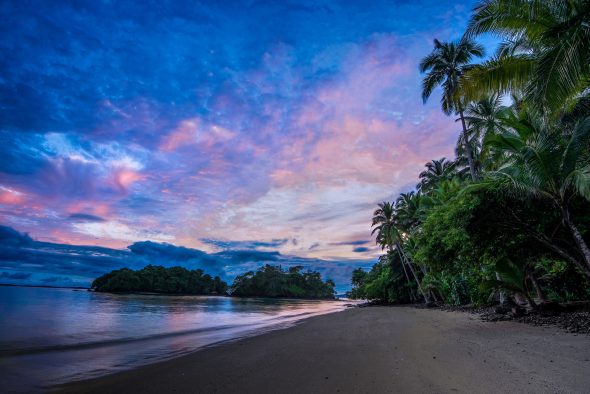
Panama Splits Qualified Investor Visa Into Two Property Tiers
Panama has raised the minimum property investment for resale purchases under its Qualified Investor visa to US$500,000 while keeping new-build purchases at US$300,000.

Which Golden Visa Programs Accept Unmarried Partners In 2026
See which Golden Visa and citizenship programs accept unmarried partners in 2026 and what proof is required.

Cheapest Citizenship by Investment Programs in 2026
The cheapest citizenship by investment programs in 2026.

