
 Portugal
 Antigua & Barbuda
 St Lucia
 Grenada
 St Kitts
 Dominica
 Hungary
 Malta
Malta Greece
 Italy
Italy Latvia
 Turkey
 Vanuatu
 Canada
 USA
USA Nauru
Nauru New Zealand
 Panama
 Cyprus
 Sao Tome
 UAE
UAE
Cheapest Citizenship by Investment Programs in 2026
The cheapest citizenship by investment programs in 2026.
7 August 2026
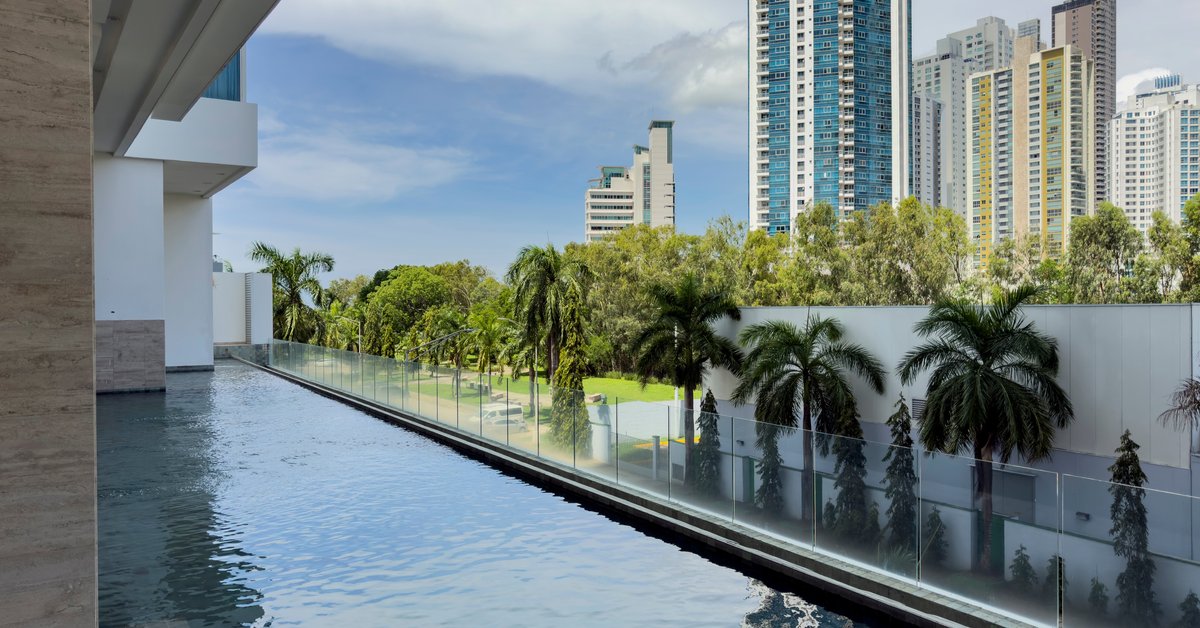
More of our clients are looking seriously at Panama right now, and it isn’t only about the residency.
The Qualified Investor Visa is one of the strongest programs we work with.
Permanent residency is granted on approval, with no temporary permit and no renewal cycle to manage. There is no minimum stay, and it is possible to apply for citizenship after five years.
For a lot of investors, that alone would be reason enough. What has changed the conversation lately is the property market itself.
Panama City spent years working through a glut of pre-pandemic construction, which kept rental yields healthy but held prices flat. That stock has now cleared. Demand has kept climbing at the same time, with more relocating professionals, more retirees and more tourists arriving each year.
The result is a city that has moved from absorbing supply to competing for it. Investors who bought two years ago are already seeing it in construction pricing, which is up more than 15% over the last twelve months.
That changes what the money buys. A US$300,000 property now does two jobs. It secures a genuine ‘Plan B’ back-up residency with a pathway to a second citizenship, and it sits in a market with measurable upward movement behind it.
Panama’s growth slowed sharply in 2024, to 2.7% from 7.2% the year before, after the closure of the Cobre Panamá mine and drought conditions constrained Canal traffic.
The economic impact proved narrower than expected. Non-mining activity picked up through 2025, and the economy expanded 4.4%.
The IMF now projects 3.8% growth for 2026, reflecting weaker global trade, before a return to 4.5% in 2027 and a similar rate over the medium term.
The World Bank forecasts 3.9% and 4.1% for the same two years. Both forecasts place Panama among the fastest-growing economies in the region.
Inflation has stayed exceptionally low throughout. Consumer prices rose just 0.7% in 2024 and were flat across 2025.
Panama’s National Institute of Statistics and Census recorded annual urban inflation of 2.5% in May 2026, up from 0.8% in March, with the IMF projecting a 1.4% annual average for the year and the World Bank 1.5%.
Fitch Ratings affirmed Panama at BB+ with a stable outlook in December 2025, citing medium-term growth prospects centred on logistics activity, and flagging a narrow government revenue base, rising debt and weak fiscal transparency as the counterweights.
Solid growth, contained inflation and an investment-adjacent credit profile all point to a stable and growing operating environment rather than a speculative one.
Another structural draw for foreign capital, particularly for American investors, is the dollar. Panama has used the US dollar as legal tender since 1904.
The Balboa exists only in coin, fixed at parity, and the dollar circulates freely across commercial and financial transactions.
For an overseas buyer, that removes currency risk from every stage of the investment: the purchase, the rental income, the running costs and the eventual sale. No comparable Latin American market offers that.
It also means Panamanian interest rates track US dollar funding conditions rather than a domestic central bank, which makes financing costs legible to anyone already familiar with the US rate cycle.
Panama’s tax system reinforces that position, and makes buying simpler too. Income earned outside the country isn’t subject to Panamanian income tax, for residents and non-residents alike.
Combined with a banking sector built around the Canal and the region’s largest concentration of international financial institutions, the frictions that usually complicate cross-border property ownership are substantially reduced.
The pattern across Panama City in 2026 is a market where supply has tightened faster than most observers expected, just as demand has grown.
Developer data shows construction has seen the biggest movement, with per-square-metre pricing up more than 15% over twelve months.
Established central districts and newer development corridors are seeing the strongest recovery, while the historic core and the mass-market periphery lag slightly behind.
Panama City also remains inexpensive by regional standards. Average asking prices sit below those in Montevideo, Mexico City, Monterrey, Guadalajara and Buenos Aires.
That points to a capital city with regional-hub economics still trading at a discount to peers with weaker growth profiles.
Asking rents have risen for more than twelve consecutive months, with recent year-on-year increases in the low teens. Those increases are showing up on new lettings rather than renewals, which is what you’d expect from a rental cycle in its early stage rather than its middle.
Tourism supplies a second demand engine, and the official numbers are strong. The Panama Tourism Authority reported 1.29 million visitor arrivals in the first four months of 2026, up 16.4% year-on-year, including nearly 955,000 overnight tourists, up 18.2%.
Tourism expenditure reached US$2.6 billion over the same period, a 15% annual increase — spending growing faster than arrivals, which points to longer stays and higher per-visitor value. It’s part of why many Golden Visa investors who have no plans to live in Panama are specifically investing in touristic property, such as hotels or serviced apartments, positioning for rental income rather than a home they’ll ever occupy.
South America supplied 36.9% of international arrivals through Tocumen, North America 29.7% and Europe 15%, with the United States the single largest source market at over 199,000 visitors.
There’s one important thing to understand when looking at Panama’s property data: the headlines can be misleading, because there are really two different property markets in Panama, and right now they’re moving in opposite directions.
The first is the local, affordable housing market. In 2025, the Panamanian government overhauled the low-cost mortgage scheme it had used since 1985 to help local buyers get on the property ladder. The new version is narrower, it only applies to lower-priced homes, and the rollout has been slow, with banks reluctant to get on board. As a result, lending to local buyers has stalled, and that part of the market is soft.
The second is the international investor market, the $300,000+ properties that qualify for the Qualified Investor Visa. This market runs on cash, not local mortgages, so none of the issues above apply to it. It’s been unaffected by the changes to local lending, and it’s the segment that’s actually tightening and gaining value.
In short: weak numbers in Panama’s affordable housing sector don’t tell you anything about the strength of the international investment market. They’re two separate markets, driven by two separate things – and mixing them up is a common mistake.
Get Your Personalised Quotation
Panama’s property cycles have historically tracked major public infrastructure, and three projects are in or approaching execution.
Within the capital, the mayor’s office has pursued pedestrian upgrades and redevelopment activity across several central districts.
With both the president and the mayor around two years into five-year terms, this is the point in the political cycle where announced projects typically move to construction.
Panama’s position among competing Golden Visa destinations has strengthened largely because what each one offers has changed.
Portugal moved away from real estate in its Golden Visa in October 2023.
The principal passive route is now a €500,000 investment into a regulated fund, and following this year’s Nationality Law reform, citizenship takes ten years for Americans and other non-CPLP nationals, versus five in Panama.
Portugal remains the stronger choice where an EU passport is the long-term objective – La Vida’s Passport Value Index ranks the Portuguese passport 15th against Panama’s 77th – and our Panama vs Portugal Golden Visa comparison sets out that trade-off in full.
For investors specifically looking to hold property, though, Panama is now the live route.
Dubai also offers a property-linked residency route, on renewable terms and with a strong tax position of its own, though the route doesn’t lead to citizenship.
What Panama brings together is a specific combination: a dollarised economy, a territorial tax system, entry pricing at a fraction of comparable destinations, and permanent residency granted on approval from a US$300,000 property purchase.
The Qualified Investor Visa, updated in 2024, grants permanent residency from a minimum US$300,000 real estate investment, held in the applicant’s name and free of liens, for at least five years.
Applicants may qualify through direct purchase or a promesa de compraventa (promise-to-purchase).
Other key factors to consider include:
La Vida’s own client data shows a clear shift.
In our October 2025 survey of more than 10,000 US clients, 85.1% cited political concerns as a driver of their interest in a second residency, more than double any other factor.
Healthcare followed at 39.1%, cost of living at 35.9% and safety at 33.3%.
The most significant finding for an investment discussion was that 76.4% identified a back-up option rather than immediate relocation as their primary goal.
For that group, the property works whether or not the residency is ever used.
The macro backdrop is stable – around 4% growth, inflation below 2%, a dollarised economy and an affirmed sovereign rating.
The demand backdrop is strengthening, with record tourism, a structurally small rental pool and sustained international arrivals. And the residency route sits at $300,000, with permanent status granted on approval.
For investors looking to combine a second residency with a genuinely working asset, the timing hasn’t been this good in a decade. To find out more, speak with La Vida’s senior consultants.
Cheapest Citizenship by Investment Programs in 2026
The cheapest citizenship by investment programs in 2026.
Nautical Nomads: Second Citizenship For Yacht Owners And Pilots
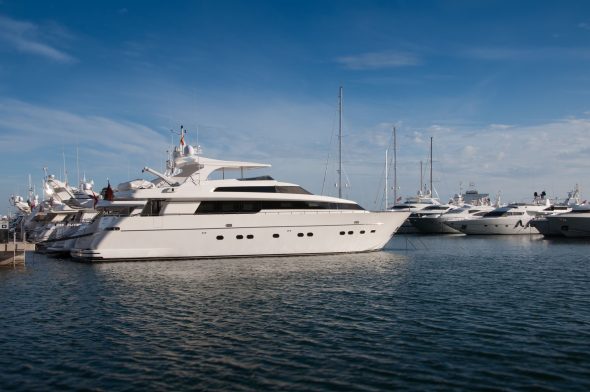
A growing share of our enquiries now comes from people whose home moves with them.
Two routes, one price: St Kitts and Nevis aligns its citizenship routes
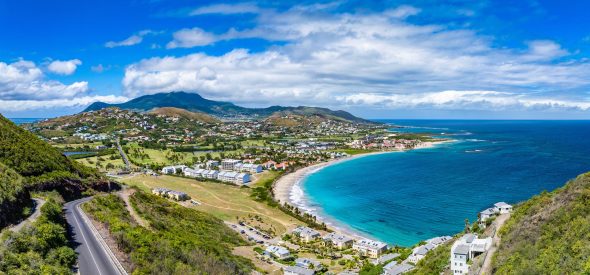
St Kitts and Nevis has leveled the price of its two citizenship donation routes at $250,000 for a family of up to four, removing the cost gap that previously separated them.
Who Decides The Future of Caribbean Citizenship Investment
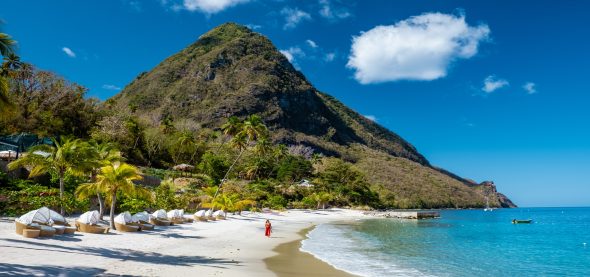
Following CIS 2026 in Saint Lucia, the debate over Caribbean Citizenship by Investment has moved beyond passports and due diligence. With the European Commission calling for programs to be phased out, and government CBI revenue averaging 6.5% of GDP across the five participating states, the question is who decides what comes next.
Discover some of the most popular residency and citizenship by investment options in 2026.
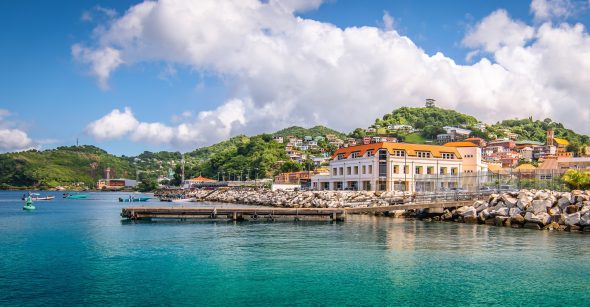
Grenada
Minimum $235,000 Donation
Real Estate Option
Citizenship & Passport
E2 USA Visa Potential
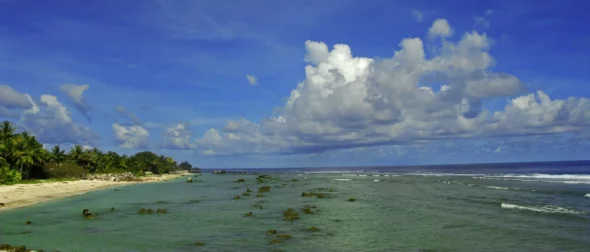
Nauru
From $115,000 Donation
LTO: $90,000 Donation – Expires December 2026
Fast Processing
Citizenship & Passport

São Tomé and Príncipe
$90,000 Investment
Full Family Inclusion
Fast Processing
Visa Free Travel